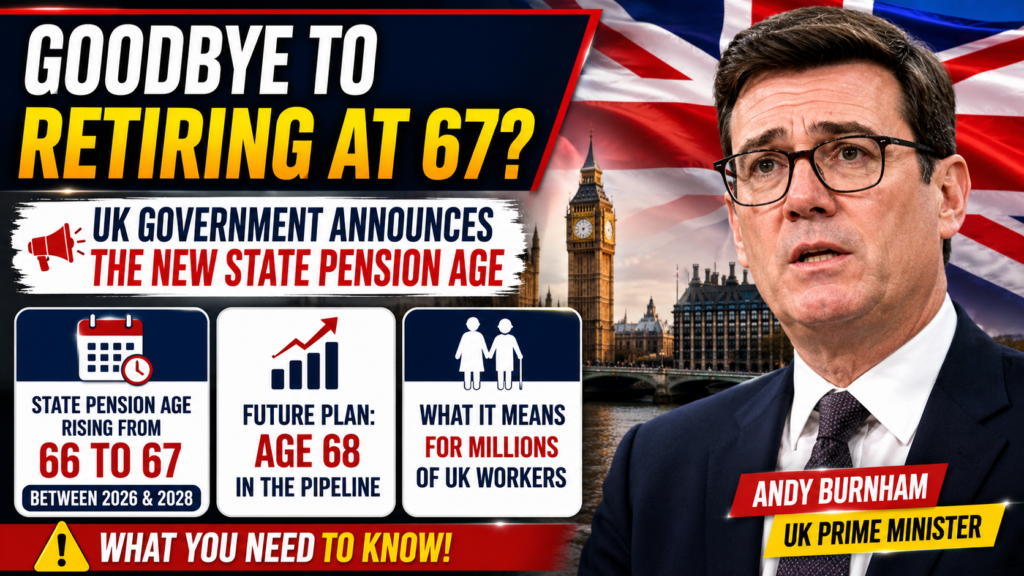
The UK State Pension age is changing again, creating fresh questions for millions of people planning retirement. The State Pension age has already increased from 65 to 66, while the next rise to 67 is being introduced gradually between 2026 and 2028. Many people are now wondering whether 67 will remain the standard State Pension age in the future. It is important to remember that State Pension age is different from compulsory retirement age. People can generally choose when to stop working, but they normally become eligible for State Pension only when they reach the qualifying age linked to their date of birth.
UK State Pension Age Is Changing
The UK Government is gradually increasing the State Pension age as part of long-term pension reforms. The State Pension age has reached 66, and the scheduled increase to 67 is being phased in between 2026 and 2028. Because the change is gradual, people will not all reach State Pension age at exactly the same time. The date depends mainly on their date of birth and the rules applying to their age group. Anyone approaching retirement should therefore check their individual State Pension age rather than relying on general information. Knowing the exact date can help people make better decisions about employment, savings, workplace pensions and retirement planning.
Why Is the State Pension Age Increasing?
One of the main reasons behind changes to the State Pension age is increasing life expectancy. People are generally living longer, meaning the government may have to pay State Pension for a longer period. At the same time, demographic changes can affect the balance between the working population and people receiving pension payments. These factors create financial pressure on the pension system. Increasing the State Pension age is one way of managing these long-term pressures. However, the change can be challenging for people in physically demanding jobs or those who may find it difficult to continue working for longer. This is why increases are introduced gradually.
Is 67 Actually the UK Retirement Age?
The UK State Pension age should not be confused with a compulsory retirement age. There is no general rule requiring everyone to stop working when they reach 67. People can usually choose to retire earlier if they have sufficient savings, workplace pensions or other income sources. They can also continue working beyond State Pension age if they wish. The State Pension age simply determines when someone normally becomes eligible to claim their government pension. This distinction is important because headlines about “retiring at 67” can sometimes cause confusion. Retirement is a personal decision, while State Pension eligibility is determined by government rules and a person’s circumstances.
When Will State Pension Age Reach 67?
The scheduled increase from 66 to 67 is being introduced gradually between 2026 and 2028. This means people reaching State Pension age during this period may have different qualifying dates depending on their date of birth. The government is not moving everyone to 67 on one single day. Instead, the change follows a phased timetable designed to give affected people time to prepare. Anyone approaching retirement should check their personal State Pension date through the official government service. This is particularly important for people who have already chosen a retirement date, because they may need additional income from employment, savings or private pensions before their State Pension becomes available.
Could the State Pension Age Rise Beyond 67?
Future increases in the State Pension age remain an important issue for younger workers and people who are still several years away from retirement. Current UK legislation provides for a future increase to 68, although the timing and implementation depend on government policy, legislation and pension-age reviews. The State Pension age is periodically reviewed using factors such as life expectancy, economic conditions, public finances and the impact on different groups. This does not mean everyone is immediately being moved to 68. Future changes would follow the relevant legal and government processes. People planning long-term retirement should therefore stay informed and avoid relying entirely on today’s pension-age rules.
Who Will Be Affected by the New Pension Age?
People whose State Pension date falls within the current transition from 66 to 67 are most directly affected. Depending on their date of birth, some people may have to wait longer than expected before receiving their State Pension. This could affect retirement plans, especially for those who have already decided when they want to leave employment. If someone retires before receiving State Pension, they may need another source of income to cover the gap. This could include workplace pensions, personal pensions, savings or investments. The impact will vary from person to person, so checking an individual State Pension forecast is more useful than relying on general retirement-age information.
Your Date of Birth Determines Your State Pension Age
Your State Pension age is mainly determined by your date of birth and the legislation applying to your age group. This means two people who are close in age may not necessarily receive their State Pension on exactly the same date. The gradual increase to 67 makes checking the individual date particularly important. People should avoid relying on old pension charts or information shared online because the rules can change. The official government State Pension age checker provides a more reliable way to understand when an individual is expected to qualify. Knowing the exact date can help with decisions about work, savings, private pensions and the timing of retirement.
How Much State Pension Could You Receive?
The amount of State Pension someone receives depends largely on their National Insurance record and individual circumstances. Under the new State Pension system, people generally need at least 10 qualifying years to receive any new State Pension, while 35 qualifying years are normally needed for the full amount under standard conditions. However, individual circumstances can affect entitlement. National Insurance credits, previous contracted-out employment and other factors may influence the final calculation. This is why people should not assume that everyone will receive the same amount. Checking an individual State Pension forecast can provide a clearer picture of expected entitlement and help with retirement planning.
Why You Should Check Your State Pension Forecast
Checking your State Pension forecast is an important step before making retirement decisions. The forecast can show when you are expected to reach State Pension age and how much State Pension you could receive based on your current National Insurance record. It can also help identify potential gaps in your contribution history. Understanding this information early gives people more time to consider their options and make suitable financial plans. Someone who expects a lower pension may decide to review their workplace pension, private savings or planned retirement date. However, people should check official guidance before making voluntary National Insurance payments because filling a gap does not always increase pension entitlement.
Can You Retire Before State Pension Age?
People can generally choose to retire before reaching State Pension age, but retiring early does not normally mean their government State Pension will begin immediately. Anyone who stops working early needs another source of income to cover the period before State Pension becomes available. This could include workplace pensions, personal pensions, savings or investments, depending on their circumstances. The longer the gap between retirement and State Pension age, the more money may be needed. People should therefore consider regular household expenses such as housing, energy, food, debt and other costs before choosing early retirement. A realistic financial plan can help ensure savings last until State Pension payments begin.
Can You Continue Working After State Pension Age?
Reaching State Pension age does not mean someone has to stop working. Many people continue working after becoming eligible for State Pension because they want additional income, enjoy their employment or prefer a gradual transition into retirement. Some continue full-time, while others choose part-time or flexible work. Continuing employment can provide extra financial security and may allow people to build further retirement savings. Someone may also decide to delay claiming their State Pension, although the financial consequences depend on the rules that apply. Anyone considering deferring their pension should check current government guidance carefully. State Pension age and retirement age are separate, giving people flexibility over when they stop working.
What Should Future UK Retirees Do Now?
People who may be affected by State Pension age changes should start planning early. First, they should check their exact State Pension age based on their date of birth. They should then review their State Pension forecast and National Insurance record to understand their expected entitlement. Those with workplace or private pensions should consider how these sources of income will work alongside the State Pension. Anyone planning to retire before State Pension age should calculate how much money will be needed to cover the gap. Reviewing household expenses, savings and pension arrangements in advance can help people make better decisions. Early retirement planning provides more time to adjust financial goals if necessary.
Final Thoughts
The UK State Pension age is continuing to change, with the scheduled increase from 66 to 67 being introduced gradually between 2026 and 2028. This could affect when millions of people become eligible for State Pension and how they plan their retirement. However, State Pension age is not the same as a compulsory retirement age, and people can generally choose when to stop working. Future changes, including the planned move towards 68 under existing legislation, could remain important for younger generations. The best approach is to check your personal State Pension age, National Insurance record and State Pension forecast. This can help you make informed decisions about savings, employment and the timing of your retirement.