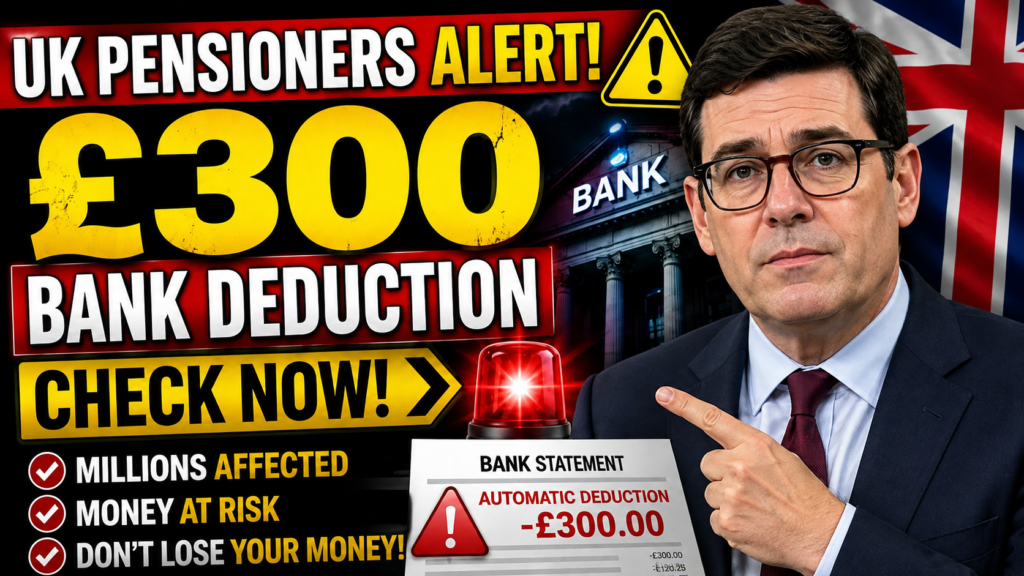
UK pensioners are being urged to check their bank statements and HM Revenue and Customs (HMRC) records carefully following growing attention around claims of a £300 bank deduction. An unexpected payment leaving a bank account can understandably cause concern, particularly for pensioners who rely on a fixed monthly income. However, it is important to understand that there is no universal rule requiring every UK pensioner to pay £300 to HMRC. Any genuine deduction depends on the individual’s tax position, outstanding liabilities, payment arrangements and personal circumstances.
What Is the £300 HMRC Bank Deduction?
A £300 deduction appearing in a bank account could potentially be linked to an outstanding payment or another authorised transaction, but pensioners should not automatically assume that HMRC has taken the money. HMRC deals with tax liabilities on an individual basis, and the amount owed can differ from one person to another. Before taking any action, pensioners should check the transaction description on their bank statement and compare it with their HMRC records, recent letters or payment arrangements.
Why Are Pensioners Being Asked to Check Their Accounts?
Pensioners often receive income from several sources, including the State Pension, workplace pensions, private pensions and savings. Changes to taxable income or tax information can sometimes affect the amount of tax a person owes. Regularly checking a bank account makes it easier to identify an unfamiliar payment quickly. If a pensioner sees a deduction of £300 or another unexpected amount, they should verify the transaction before assuming that it is a new government charge or a deduction connected with their pension.
Is HMRC Really Taking £300 From Pensioners?
There is no blanket rule stating that all UK pensioners must pay a fixed £300 deduction to HMRC. The amount of tax an individual pays is generally determined by their taxable income and circumstances, rather than simply by being a pensioner. Some pensioners may have tax to pay while others may not, depending on their income and allowances. Therefore, claims suggesting that every pensioner is automatically losing £300 should be treated cautiously unless they are supported by an official HMRC announcement.
How Could an HMRC Tax Debt Affect Your Bank Account?
If a person genuinely has an outstanding tax debt, HMRC has legal powers to recover certain unpaid amounts, subject to the applicable rules and circumstances. Tax can sometimes be collected through adjustments to tax codes or other agreed payment arrangements. A pensioner who receives an official notice about an outstanding amount should read it carefully and check the details against their HMRC account. If a bank payment has already been made, the transaction reference should also be checked to establish exactly what the payment relates to.
Pensioners Should Check Their HMRC Tax Code
Checking your tax code is another important step, particularly if you receive income from more than one source. Pension income, employment income and other taxable income can affect how much tax is collected. If HMRC has incorrect information about your income, your tax code may not reflect your current circumstances. Pensioners who believe their tax code is wrong should contact HMRC through an official GOV.UK channel and provide accurate information so that their records can be reviewed.
What Should You Do If £300 Has Been Deducted?
If £300 has unexpectedly left your bank account, the first step is to look at the transaction details and identify the organisation or payment reference shown by your bank. You should then check your HMRC records and any recent correspondence to see whether the amount matches an outstanding payment. If you still cannot identify the transaction, contact your bank using the official contact details on your card or statement. If you believe it relates to HMRC, use the official GOV.UK website rather than relying on contact details provided in an unexpected message.
Beware of Fake HMRC Messages
Pensioners should be particularly careful about scams involving HMRC because fraudsters often use tax-related stories to create urgency. A fake message may claim that a specific amount such as £300 must be paid immediately or that a pension will be stopped unless payment is made. Genuine-looking logos and official terminology can make these scams difficult to recognise. Never share your banking password, PIN, card security information or one-time security code with someone who contacts you unexpectedly, and avoid clicking suspicious payment links.
Could the Deduction Be Related to Another Payment?
An unfamiliar £300 transaction does not necessarily have anything to do with HMRC. It could be a direct debit, insurance payment, subscription, loan repayment, household bill or another authorised transaction. Bank statements normally provide information that can help identify the source of a payment. Pensioners should examine the transaction carefully and contact their bank if they do not recognise it. This simple check can prevent unnecessary worry and can also help identify potentially fraudulent activity.
How to Check Your HMRC Records
Pensioners can use the official GOV.UK website to access relevant HMRC services and review available tax information. Depending on their circumstances, they may be able to check income details, tax codes, payments and amounts that may be outstanding. It is safest to access GOV.UK directly by entering the website address yourself or using a trusted bookmark. Pensioners should avoid accessing HMRC services through links sent in unexpected texts, emails or social-media messages.
What If You Cannot Afford to Pay?
If HMRC confirms that you genuinely owe tax and you are unable to pay the full amount immediately, do not ignore the situation. Contact HMRC through an official channel and explain your circumstances. Depending on the individual situation, HMRC may discuss available options for dealing with an outstanding liability. Keeping records of correspondence and making sure HMRC has your current contact and income information can also help prevent misunderstandings about the amount owed.
Important Warning for UK Pensioners
The most important point is that there is no automatic £300 HMRC deduction that applies to every UK pensioner. If money has been taken from your account, there should be a specific reason for that transaction, and the reason should be verified through reliable records. Pensioners should not rely solely on social-media posts, forwarded WhatsApp messages or sensational headlines when dealing with tax or banking matters. Checking the bank statement and contacting the relevant organisation directly is the safest approach.
Final Words
The reported £300 bank deduction may cause concern, especially among pensioners who carefully manage their monthly income, but it should not be confused with a universal new tax on pensioners. Individual tax circumstances vary, and an unexpected bank transaction can have several possible explanations. The best approach is to check the transaction, review your HMRC information and contact your bank or HMRC through official channels if anything remains unclear. Above all, pensioners should remain alert to scams and never provide sensitive financial information to an unverified caller or website.
Focus Keyphrase: £300 HMRC bank deduction